Boiler Repair in Far Rockaway, Queens
Systematic diagnostic inspection and mechanical repair for residential steam and hot-water heating systems across Far Rockaway, Bayswater, and the Rockaway Peninsula.
When winter nor'easters bring freezing Atlantic winds across Jamaica Bay and through local neighborhoods, a properly operating heating boiler is essential for the comfort and structural safety of your home. If your heating system stops firing, makes severe banging sounds, leaks water around safety controls, or produces insufficient heat, our diagnostic approach isolates the underlying mechanical fault to restore safe, balanced heating.
Dependable Heating Diagnostics for Far Rockaway Properties
Residential buildings across Far Rockaway and nearby Bayswater encompass a distinct cross-section of Queens architecture. From Victorian frame houses and early twentieth-century detached homes near Mott Avenue and Beach 20th Street to classic multi-family residential buildings, these properties rely on established hydronic and steam heating infrastructure designed to withstand harsh seaside winters.
Navigating heating equipment failures requires thorough familiarity with both classic cast-iron boilers and modern atmospheric or condensing units. Property owners searching for professional boiler repair Far Rockaway Queens need an orderly diagnostic evaluation rather than guesswork. Whether your building is heated by a low-pressure single-pipe steam setup or a zoned closed-loop hot-water network, identifying the exact electrical, fuel, or hydraulic failure point ensures code-compliant, durable repairs that keep your living spaces comfortable throughout the heating season.
Urgent Heating Loss Protocol
If you are facing sudden heating failure during freezing temperatures, contact dispatch immediately at (315) 202-8009. Keep interior doors open to circulate residual heat toward plumbing lines, and never operate unvented kitchen ovens or charcoal grills indoors as makeshift heat sources.
Steam Boilers vs. Hot Water Boilers in Local Homes
Understanding the operational principles of your heating unit helps explain why particular symptoms develop.
Steam Boiler Heating Systems
Steam heating remains common in older residential homes throughout Far Rockaway and neighboring communities. In a steam arrangement, water inside the cast-iron vessel boils into vapor at low operating pressures—typically between 0.5 and 2 psi. The expanding steam rises naturally through risers to cast-iron radiators, where it condenses back into liquid water and returns via gravity to the boiler.
When you require steam boiler repair Far Rockaway Queens, troubleshooting focuses heavily on operating water level management, sight glass sediment, automatic float switches, pressuretrol calibration, and radiator air vents. Over-pressurizing a steam boiler does not improve heat output; instead, excessive pressure holds air vents shut and forces steam out through the safety relief valve.
Hydronic (Hot Water) Boiler Systems
Hydronic boilers heat water without bringing it to a boil, utilizing one or more electric circulator pumps to move hot water (generally between 140°F and 180°F) through copper baseboard convectors, radiant tubing, or cast-iron units before returning to the boiler in a continuous closed loop.
Specialized hot water boiler repair Far Rockaway Queens addresses system pressure stability (standardly 12 to 15 psi cold, rising to 18 to 22 psi hot), circulator pump relay function, expansion tank diaphragm health, and purging trapped air pockets that prevent hot water circulation to upper floors or individual heating zones.
Boiler Repair Symptoms and Warning Signs
Heating equipment rarely breaks down without giving early warning signs. Being observant of early operational changes can prevent total heating shutdowns in freezing weather. Contact our telephone desk if you notice any of the following symptoms:
Why Heating Systems Fail in Coastal Queens Buildings
Far Rockaway's geographical setting on the Rockaway Peninsula directly impacts the lifespan and operating conditions of basement heating equipment. Properties near Jamaica Bay, Mott Basin, and the Atlantic shore operate under distinct environmental stresses:
- Salt Air and Atmospheric Moisture: The maritime atmosphere accelerates oxidation on external boiler jackets, gas control valves, electrical terminals, flue draft hoods, and galvanized piping.
- Basement Dampness and Elevated Water Tables: Older basements along Beach 19th Street, Beach 20th Street, and low-lying coastal blocks frequently experience elevated ambient humidity. Damp basement environments can corrode burner trays, electrical transformers, and aquastat housings.
- Mineral Scale and Sedimentary Accumulation: Over years of operation, municipal water mineral solids settle into boiler bottoms. In steam systems, scale settles heavily inside the low-water cutoff float chamber, which can prevent the float from detecting low water conditions or cause the switch to stick.
- Vibration and Thermal Stress: Decades of continuous expansion and contraction loosen pipe joints, crack radiator spuds, and cause stress fractures in older cast-iron push nipples connecting boiler sections.
What Happens During a Boiler Diagnostic and Repair Visit
A successful heating service call begins with a structured mechanical evaluation rather than guesswork. When a technician arrives to inspect a boiler not working Far Rockaway Queens issue, the visit follows a rigorous diagnostic sequence:
System Verification and Safety Assessment
Inspection of electrical disconnect switches, main breaker status, thermostat calibration, emergency shutoff switches, and fuel supply valves. A visual check ensures there are no fuel odors or combustible hazards near the combustion chamber.
Safety Controls and Pressure Diagnostics
On steam systems, verifying water level in the sight glass, testing low-water cutoff electrical safety trips, and evaluating the pressuretrol setting. On hydronic systems, reading system pressure on the tridicator gauge and checking the pressure-reducing fill valve.
Burner and Ignition Testing
Testing ignition spark, pilot assembly, thermocouple or flame rectification rod, and gas control valve opening voltage. Verifying burner flame quality and inspecting combustion air pathways for adequate ventilation.
Venting, Draft, and Relief Device Inspection
Ensuring the flue pipe, barometric damper or draft hood, and chimney connection draw combustion exhaust safely outdoors. Testing the pressure relief valve for signs of internal weeping, lime buildup, or seat failure.
Component Repair and Operating Test
Replacing failed mechanical or electrical parts, tightening leaking compression fittings, purging air pockets, and running the boiler through a full operational cycle to confirm stable firing, proper shutoff, and steady heat delivery.
Repair vs. Replacement: Making the Right Decision
When heating trouble strikes, homeowners understandably wonder whether an existing boiler can be repaired safely or if a complete equipment overhaul is required. We provide objective assessments based on mechanical condition rather than sales pressure.
When Repair Is the Appropriate Path: If your cast-iron heat exchanger sections are intact and watertight, component failures—such as defective thermocouples, worn circulators, malfunctioning zone valves, leaky automatic water feeders, or faulty aquastats—can usually be repaired or replaced at reasonable expense.
When Replacement Deserves Serious Consideration: If the cast-iron heat exchanger has developed internal cracks, is leaking water between sections, or has suffered severe corrosion, the boiler cannot be safely patched. Furthermore, boilers exceeding 20 to 25 years of age frequently suffer from obsolete replacement parts and diminished fuel efficiency. For full details on replacement sizing and equipment options, explore our boiler replacement service in Far Rockaway.
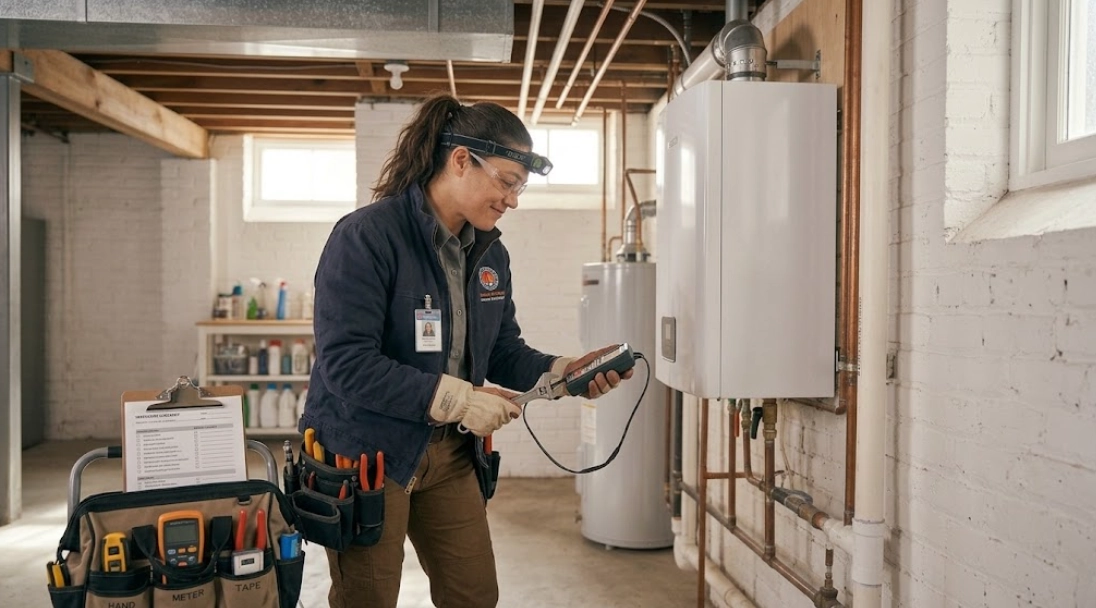
Factors That Influence Repair Complexity and Costs
Because heating installations vary greatly across Queens County, repair complexity depends on several practical property factors:
- Boiler Type and Fuel System: Standard atmospheric gas boiler repair Far Rockaway Queens involves different components than oil-fired units, high-efficiency condensing boilers, or commercial dual-fuel equipment.
- Age and Accessibility: Compact basement crawl spaces or tight utility rooms common in historic Rockaway frame homes require extra labor time to safely reach back valves, expansion tanks, and distribution headers.
- Part Availability: Common components like universal thermocouple sensors, standard Taco circulator pumps, and Honeywell aquastats can be replaced immediately, whereas proprietary electronic boards for older discontinued models may require specialized sourcing.
- System Piping Condition: Fragile, heavily rusted distribution lines or frozen shutoff valves surrounding the boiler must be handled with care to prevent secondary leaks during part installation.
Practical Boiler Maintenance and Prevention Guidance
Proper seasonal maintenance preserves equipment efficiency and helps prevent untimely heating failures during freezing winter conditions:
Routine Homeowner Care Checklist
- Check Sight Glass Water Levels (Steam Boilers): The water level should remain steady at roughly half to two-thirds up the gauge glass. Muddy or jumping water indicates sediment that calls for skimming.
- Flush the Low-Water Cutoff (Weekly in Winter): Carefully open the blowdown valve into a bucket for five seconds while the burner is firing. The water should flush sediment, and the burner should momentarily shut down, confirming the safety switch operates.
- Inspect Surrounding Clearances: Maintain at least three feet of clear space around the boiler. Never store cardboard boxes, paint cans, laundry items, or cleaning solvents near combustion air intakes.
- Monitor Pressure Gauges: Regularly inspect the gauge. Hydronic systems should read between 12 and 18 psi; steam systems should register under 2 psi during normal heating cycles.
Complete Heating and Plumbing Services in Far Rockaway
In addition to boiler diagnostics, NY Plumbing provides comprehensive service coverage across related mechanical systems.
Boiler Replacement
When older boilers suffer cracked heat exchangers or persistent inefficiency, professional sizing and installation ensure optimal heating. Learn more about boiler replacement in Far Rockaway.
Steam Heat & Radiator Repair
Fix cold radiators, noisy water hammer banging, leaking supply valves, and stuck air vents. Read about our radiator repair in Far Rockaway.
Water Heater Repair
Troubleshoot inconsistent water temperatures, tank leaks, faulty pilots, and sediment accumulation. Discover our dedicated water heater repair in Far Rockaway.
Sewer Line Repair
Diagnose persistent mainline backups, root intrusion, and cracked clay sewer lines with camera inspection. Explore sewer line repair in Far Rockaway.
Sump Pump & Flood Protection
Protect coastal basements against high groundwater tables, failed float switches, and storm surge with dependable sump pump service in Far Rockaway.
Gas Line Repair & Inspection
Ensure safe natural gas piping, pressure testing, appliance hookups, and compliance with NYC DOB regulations through our gas line repair in Far Rockaway.
Drain Cleaning
Clear stubborn kitchen sink stoppages, tub blockages, and main line branch clogs quickly with mechanical snaking. View drain cleaning in Far Rockaway.
Local Heating Service Coverage Near Far Rockaway & Bayswater
Our heating technicians provide diagnostic and repair dispatch throughout the Far Rockaway area. Whether your property is situated near Beach 20th Street, along Mott Avenue, or close to the coastal parkland of Bayswater Point State Park, we understand the heating issues prevalent in local single-family residences, detached frame buildings, and multi-unit apartments.
We routinely assist homeowners seeking boiler repair near Bayswater, along with properties requiring boiler repair near Arverne and nearby Nassau border communities seeking boiler repair near Inwood (Nassau). Check our full Far Rockaway service areas page for details regarding regional service coverage.
Frequently Asked Questions About Boiler Repair
Clear answers to common questions about heating system repairs in Far Rockaway.
Why did my boiler stop firing during cold weather in Far Rockaway?
When a boiler fails to ignite during a coastal freeze, common culprits include tripped electrical emergency switches, low system water pressure, sediment buildup in the low-water cutoff chamber, a faulty flame sensor or thermocouple, or a locked-out ignition module. On steam systems throughout Queens County, low water levels trigger an automatic shutdown to prevent dangerous dry firing.
What is the difference between steam boiler repair and hot water boiler repair?
Steam boilers operate at low pressure (typically 0.5 to 2 psi) by boiling water into steam that rises to radiators through natural vapor pressure, requiring careful monitoring of the sight glass, pressuretrol, and radiator air vents. Hot water (hydronic) boilers operate under higher closed-loop pressure (standardly 12 to 20 psi) and rely on electric circulator pumps, expansion tanks, and pressure-reducing valves to distribute heat.
Why are my steam radiators banging and clanking loudly?
Radiator banging, known as water hammer, occurs when high-velocity steam collides with pools of condensed water trapped in steam pipes or radiator castings. This problem is usually caused by clogged radiator air vents, supply valves that are only partially open, sagging horizontal steam mains, or an incorrect pitch that prevents condensate from draining back to the boiler.
How do you decide whether a boiler should be repaired or replaced?
A repair is practical and cost-effective when the cast-iron heat exchanger sections are structurally sound and the issue involves external mechanical or electrical components like gas valves, zone controls, or circulators. Complete boiler replacement is evaluated when the heat exchanger is cracked, corroded through, leaking between block sections, or when obsolete parts make safe operation impossible.
What immediate safety steps should I take if I smell gas near my heating system?
If you smell natural gas or suspect a fuel gas leak, evacuate every occupant from the premises immediately. Do not operate light switches, do not touch electrical breakers, do not use phones indoors, and do not attempt DIY repairs. Once safely outside at a distance, call 911 and the local gas utility (National Grid) immediately.
Restore Reliable Heat to Your Far Rockaway Home
From cold radiators and water hammer to complete no-heat emergencies, speak with our telephone team to arrange service.
Call (315) 202-8009Direct telephone dispatch for Far Rockaway, Bayswater, Arverne, and surrounding communities.